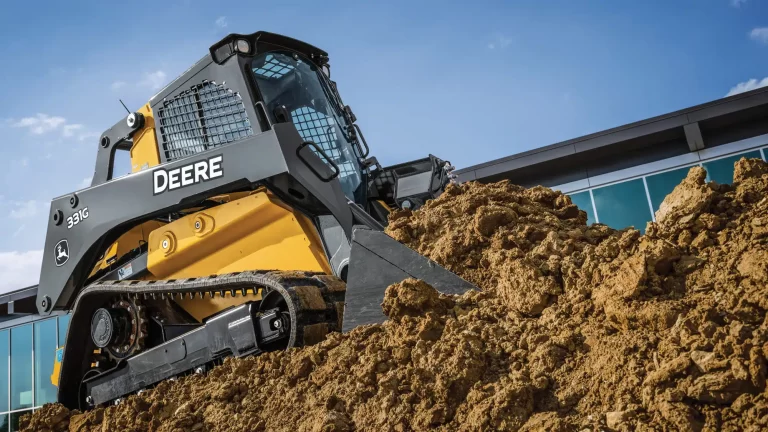
The A-Z of Plate compactors, how they work and where to use them!
A vibration plate compactor is your go-to machine for turning loose soil, gravel, and asphalt into a rock-solid foundation. Often just called a ‘wacker plate’, it’s what stops driveways from sinking and patios from cracking. It gets the ground underneath solid before you even think about laying pavers or pouring concrete.
Your Foundation for a Flawless Finish
Ever seen a new paver patio start looking wavy after just one winter? That’s almost always because the ground underneath wasn’t packed down properly. A vibration plate compactor, like the Batmatic range from Machtig mobile Equipment, is your best insurance against that exact problem, saving you the headache and cost of a callback. For any ground-level project, it’s just as vital as a concrete cutter is for slab work or a mini loader is for shifting materials. Here’s a simple way to think about it; Picture a large jar filled loosely with sand. Give that jar a good shake, and you’ll see the sand settle and the level drop. The grains pack together, pushing out the air pockets. A vibration plate does the same thing to the ground, just with a hell of a lot more force.
The Real-World Impact of a Solid Base
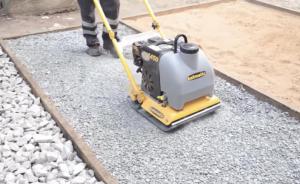
The machine’s heavy steel plate is driven by a petrol or diesel engine, making it vibrate thousands of times a minute. It’s this intense vibration, plus the machine’s own weight, that forces soil and gravel particles to lock together tightly. This process squeezes out air and gets rid of the hidden gaps that cause major issues down the track.
Without proper compaction, you’re gambling with the stability of your whole project. Water will get into those gaps, and when it warms and cools, it’ll shift the ground. Even the weight of a car or regular foot traffic will cause slow, uneven settling.
A properly compacted base is the difference between a job that lasts for decades and one that needs redoing in a year. It’s not just about making the ground flat; it’s about making it strong enough to handle whatever you build on it.
Why You Can’t Skip This Step
For any tradie worth his salt, time is money and your reputation is everything. Using a vibration plate compactor isn’t just a ‘nice to have’—it’s a non-negotiable step for quality work. It’s the only real way to know that the sub-base for a new driveway, the foundation for a retaining wall, or the ground under a shed slab is built to last.
Here’s where it makes a real difference on the job site:
- Creating Sub-Bases: It’s absolutely essential for building solid, level bases for patios, pathways, and driveways with materials like crushed rock or road base.
- Laying Asphalt: Perfect for compacting hot mix asphalt to create smooth, durable surfaces for new driveways or patch repairs.
- Backfilling Trenches: Ensures the soil you put back into a trench after laying pipes is just as solid as the ground around it, stopping those tell-tale dips from forming later. A tracked site dumper like the Mechbadger might get the fill in place, but the compactor makes it permanent.
- Preparing for Concrete: Provides a firm, unyielding surface before you pour a concrete slab for a shed, workshop, or extension.
At the end of the day, a wacker plate isn’t just another tool. It’s your guarantee of a quality job, ensuring the work you do today stands strong for years. It protects your reputation and saves you having to fix problems that were easily preventable.
Understanding How Your Plate Compactor Works
Ever wondered what’s actually happening inside your plate compactor to turn loose dirt into a rock-solid base? It’s not magic, just some clever, tough engineering. Getting your head around the mechanics helps you understand why these machines are so effective and how to get the most out of them on the job.
At its core, a plate compactor is a simple but powerful mix of three key parts: a reliable engine, an eccentric weight system, and a heavy base plate. Together, these create the intense force needed for proper compaction. It’s a machine designed for one purpose: to violently shake the ground into submission.
The Engine and The Eccentric Weight
The whole show kicks off with the engine, usually a tough-as-nails petrol or diesel unit (Batmatic Compactors are available with Yanmars, Kohlers, Hondas or Hatz diesels). The main job of the engine is to spin a small, off-balance weight, known as an eccentric weight, at incredibly high speeds—often over 4,000 times a minute.
Think about what happens when you accidentally leave a single heavy boot in a washing machine on spin cycle. As it spins, the unbalanced load creates a massive wobble that shakes the whole machine. A plate compactor uses this exact principle but channels that energy in a controlled way.
This spinning eccentric weight is the heart of your compactor. The rapid, powerful vibrations it generates are what force soil, gravel, or asphalt particles to shuffle around, find their neighbours, and lock tightly together.
As the weight spins, it generates a huge amount of centrifugal force. This is the real ‘punching power’ of the machine. The heavier the weight and the faster it spins, the harder your compactor hits. This is what lets it compact material several inches deep, not just skim the surface.
From Vibration to Compaction
All that vibration would be useless if it wasn’t aimed where it needs to go. That’s the job of the heavy, flat base plate. This solid slab of steel takes the intense vertical vibrations from the eccentric weight and transfers them straight into the ground.
This combination of rapid vibration and the machine’s own weight does two crucial things:
- It overcomes friction: The high-frequency vibrations make the individual particles of soil or aggregate almost ‘fluid-like’ for a split second, allowing them to move and settle into a tighter arrangement.
- It removes air voids: The downward force from the plate’s weight squeezes out the air pockets trapped between those particles, packing them into a dense, interlocking mass.
The result is a foundation that’s significantly stronger and
more stable. The whole process removes the potential for future settling, which is what prevents headaches like sinking pavers or cracked concrete. For more specialised jobs, you can find a range of top-tier compaction tools from leading manufacturers. To see how different models are built for specific tasks, you can learn more about Batmatic plate compactors and their focus on durability.
Why The Handles Matter
Finally, there’s a part of the machine that’s all about protecting you, the operator: the shock-mounted handles. If you had to hold onto a handle bolted directly to that vibrating plate, your arms would feel like jelly in minutes.
The shock mounts are basically tough rubber dampeners sitting between the machine body and the handle assembly. They absorb the worst of the vibrations, stopping them from travelling up into your hands and arms. This simple feature is what lets you operate the machine comfortably and safely for longer, reducing fatigue and letting you focus on getting a perfectly smooth, compacted finish. It’s a small detail that makes a world of difference at the end of a long day.
Choosing the Right Plate Compactor for Any Job
Picking the wrong vibration plate compactor is like bringing a spanner to a sledgehammer job. You might get there in the end, but the result won’t be right. Matching the machine to the mission is the secret to working efficiently and delivering a final product that lasts. It’s about knowing what the specs on the side of the machine actually mean out on the job site.
When you’re comparing models, it’s easy to get lost in numbers. But once you understand the critical differences, you can pick the perfect tool for the task, whether you’re prepping a sub-base for a concrete slab, laying asphalt, or backfilling around footings.
The main benefits are a longer project lifespan and a much higher quality finish. Both are crucial for building and keeping a strong professional reputation.
Forward vs. Reversible: Which One Do You Need?
The first big decision is choosing between a forward (or single-direction) plate compactor and a reversible one. This choice boils down to the kind of work you do day in and day out.
To help you decide, here’s a quick comparison of the two main types. This table breaks down their strengths and best-use cases, making it easier to see which machine fits your typical job site.
Plate Compactor Types At a Glance
| Feature | Forward (Single-Direction) Compactor | Reversible Compactor |
| Movement | Moves only in a forward direction. | Can switch between forward and reverse. |
| Best For | Open areas, straight runs, smaller jobs. | Tight spaces, trenches, and corners. |
| Weight | Generally lighter and more manoeuvrable. | Heavier, offering more compaction power. |
| Typical Use | Patios, walkways, small asphalt patches. | Deep foundations, backfilling, large-scale jobs. |
| Ease of Use | Simpler to operate; requires turning space. | More complex but highly efficient in confined areas. |
Basically, forward plate compactors are the workhorses for open areas. They only travel one way, so you have to physically turn the machine around to make another pass. They’re usually lighter, easier to handle, and perfect for small-to-medium jobs like setting a patio base or patching a bit of asphalt.
On the other hand, reversible plate compactors are the specialists for tight spots. With the flick of a lever, you can shift from forward to reverse, making them brilliant for working in trenches or compacting soil right up against a foundation wall. They are heavier and pack more of a punch, which makes them ideal for deeper layers of material.
Decoding the Specs That Matter
Once you’ve decided on the type, it’s time to look at the key performance specs. These numbers tell you what the machine can do on the ground.
Centrifugal Force (kN)
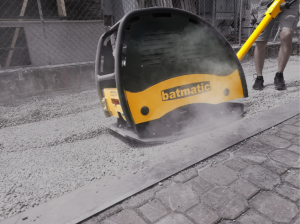
This is the most important number. Measured in kilonewtons (kN), it tells you how hard the compactor hits the ground. Simply put, a higher centrifugal force means deeper, more effective compaction.
Think of it this way: a high centrifugal force is your sledgehammer for thick layers of road base, while a lower force is your standard hammer for thinner layers of sand or paver dust.
Plate Size (mm)
The size of the base plate affects both coverage and pressure. A wider plate covers more ground with each pass, which is great for large, open areas. But, a narrower plate concentrates the machine’s force into a smaller footprint, increasing the pressure and delivering more focused compaction power.
Engine Type (Petrol vs. Diesel)
The engine is the heart of your vibration plate compactor, and the choice between petrol and diesel often comes down to power versus convenience.
- Petrol Engines: These are generally lighter, easier to start, and cheaper to buy. Petrol is everywhere, making them a fantastic choice for general-purpose use. Many of our most popular machines fall into this category, and you can check out our range of forward plate compactors to see some great examples.
- Diesel Engines: Known for their raw torque and fuel efficiency, diesel engines provide more grunt for heavy-duty compaction. You’ll typically find them on larger, reversible models built for long, demanding workdays.
By weighing these factors against the jobs you tackle every day, you can confidently choose a wacker plate that will work as hard as you do and deliver a flawless, solid base every time.
Common Applications and Pro-Level Techniques
Alright, you know what to look for in a machine, so let’s get our hands dirty. A vibration plate compactor is an incredibly versatile piece of kit, but knowing where and how to use it properly is what separates a decent job from a professional one. This is where the theory hits the dirt, whether you’re laying the foundation for a new patio or patching up a potholed driveway.
These machines are the unsung heroes of countless construction and landscaping projects. It’s no surprise they’re popping up on more sites across Australia; as our towns and cities expand, so does the demand for solid infrastructure. The global market for vibratory plate compactors was valued at $1.99 billion and is tipped to reach $3.98 billion by 2033. This surge is fuelled by the boom in housing, commercial buildings, and roadworks—all of which rely on quality soil compaction.
Preparing Sub-Bases for Patios and Walls
This is the bread-and-butter work for any good plate compactor. A properly compacted sub-base is the only thing standing between a beautiful paver patio and a lumpy, sinking disaster. The same goes for retaining walls.
Once you’ve dug out and spread your base material—like crushed rock or road base—the key is to compact it in thin layers, or ‘lifts’. A good rule of thumb is to work with 100-150mm of material at a time. Trying to compact a layer that’s too thick is a classic rookie mistake; the machine just skims the top, leaving the bottom loose.
Pro Tip: Your aggregate needs a little moisture for the best compaction. It shouldn’t be bone dry or soaking wet. A quick field test is to grab a handful and squeeze. If it holds its shape without crumbling or dripping water, your moisture content is just about perfect.
Laying and Patching Asphalt
For asphalt jobs, from new driveways to patch repairs, a plate compactor is invaluable. The most important factor here is temperature. Hot mix asphalt has to be compacted while it’s still hot and workable, so you have to move quickly.
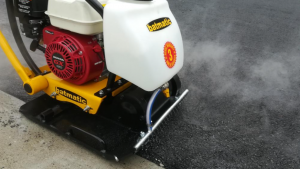
For asphalt, a compactor with a water tank and sprinkler system isn’t just a nice-to-have; it’s essential. The sprinkler creates a thin film of water on the base plate, which stops the hot, sticky asphalt from clinging to the steel. This simple feature is the secret to a smooth, professional finish.
When patching, make your first pass slightly overlapping the edge of the patch to create a strong, sealed seam. Then, work from the outside edges towards the centre. This stops the machine from pushing the hot asphalt out at the sides.
Working Alongside Other Gear
A vibration plate compactor rarely works alone—it’s a team player. Knowing how it partners with other equipment makes your whole operation run smoother.
Here’s how it typically fits in with other common machines:
- After a Tamping Rammer: In deep, tight trenches for pipes, a tamping rammer (or ‘jumping jack’) is often used first. It’s perfect for compacting clay-heavy soils at the bottom. Once the trench is partly backfilled, the plate compactor takes over to finish the wider, upper layers of granular fill.
- Before a Mini Skid Steer: A mini skid steer or a tracked dumper might move and spread your base material, but the plate compactor is what does the real work of consolidation. It sets the stage, creating a firm, stable surface ready for the next step, whether that’s paving or concrete.
The Crisscross Pattern for Perfect Compaction
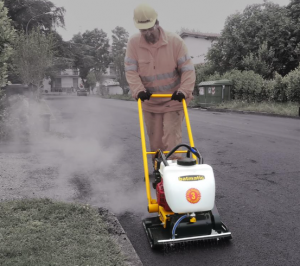
For a truly uniform result, especially on larger areas like a driveway base, don’t just run the machine back and forth in one direction. The best technique is to use a crisscross pattern.
Start by making several overlapping passes across the entire area in one direction (say, north to south). Once you’ve covered every spot, turn the machine 90 degrees and repeat the process with another set of passes (east to west). This crisscross method ensures every square inch gets compacted from multiple angles, eliminating weak spots and creating a rock-solid base.
Essential Maintenance to Prevent Downtime
A reliable machine is one that’s been looked after. For your vibration plate compactor, skipping a few simple checks is the fastest way to end up with costly downtime. Don’t think of maintenance as a chore; think of it as 15 minutes of prevention that saves you from a full day of frustrating and expensive repairs.
These machines live a tough life, constantly shaking themselves to get the job done. That intense vibration is their greatest strength, but it’s also their worst enemy when it comes to nuts and bolts. A quick walk-around at the start of each day is non-negotiable.
The Daily Checks That Make a Difference
Before you pull that starter cord, make these checks part of your daily ritual. They only take a few minutes but will spot small issues before they become major failures.
- Check for Loose Hardware: Vibration is notorious for loosening bolts. Pay special attention to the engine mounts, the exciter housing bolts, and the handle assembly. A quick check with a spanner can stop a crucial part from rattling off mid-job.
- Inspect Oil and Fuel Levels: It sounds obvious, but running an engine low on oil is a guaranteed way to seize it. Top up the fuel with a clean can, too—the last thing you want is dirt getting in and clogging the carby.
- Clean the Air Filter: This is absolutely critical, especially on dusty sites. A clogged air filter chokes the engine, robbing it of power and making it run rough. Give it a good tap to knock out the dust or a quick blast with an air compressor if you have one handy.
A clean air filter is the single most important maintenance item for keeping your compactor’s engine healthy. On a really dusty job, you might even need to clean it more than once a day.
Weekly Tasks for Long-Term Reliability
Once a week, set aside more time to give the machine a thorough going-over. These jobs are key to making sure your compactor keeps earning its keep for years. The demand for reliable gear is always growing, especially as the construction market expands. With that much work on the go, you can’t afford to have your gear let you down.
These extra weekly checks will keep your machine running like clockwork.
- Scrape the Base Plate: Dirt, mud, and asphalt can cake onto the underside of the plate. This build-up creates drag and reduces compaction efficiency. Keep a scraper handy and make sure the plate is always clean and smooth.
- Check V-Belt Tension: The V-belt transfers power from the engine to the exciter. If it’s too loose, it will slip, and you’ll lose compaction force. If it’s too tight, it will put a huge strain on the engine and exciter bearings. Check for cracks or shiny glazing, and replace it if it looks worn.
- Inspect Shock Mounts: These rubber mounts protect you and the engine from the worst of the vibrations. Look for any cracks, splits, or signs that the rubber is perishing. If they’re shot, your arms will feel it, and the engine will be taking a beating.
For specific models like a Batmatic forward plate compactor, following a simple checklist ensures you cover all the key points. You can see an example of a durable, easy-to-maintain machine to get a better idea of how quality components can make maintenance that much easier.
Got Questions? We’ve Got Answers
When you’re out on the job, you need straight answers, not guesswork. We get asked a lot about the finer points of using a vibration plate compactor, so we’ve put together some of the most common ones. Here’s the practical, no-fluff advice you can use on site today.
How Do I Know When the Ground Is Properly Compacted?
That’s a great question, and knowing the answer is what separates the pros from the amateurs. While a proper soil density test is the only way to be 100% certain, you can get very close with a few solid field tests.
A key sign to watch for is when the compactor starts to ‘bounce’ or ‘walk’ faster across the surface instead of digging in. This tells you the ground is firming up and resisting the compaction force. It’s almost like the machine is saying, “Alright, I’m done here.”
Another simple method is to walk over the compacted area. If you’re only leaving very shallow footprints, you’re on the right track. For granular materials like crushed rock or sand, the surface will look tightly locked together, with no loose stones rattling about. That final pass should feel solid under the machine, not soft or spongey.
Just be careful not to over-compact. It’s possible to go too far, which can fracture the aggregate and actually weaken your base. For most projects, though, these signs will tell you when you’ve hit that sweet spot.
Can I Use a Plate Compactor on Wet Clay Soil?
Tread carefully here. While a bit of moisture is crucial for good compaction in most soils, really wet, heavy clay is a different beast. It can be a massive headache for a standard vibration plate compactor.
The machine’s vibrations can turn the top layer of wet clay into a soupy mess without actually compacting what’s underneath. The plate just gets bogged down, and you won’t achieve the density you need.
For heavy, wet clay soils, a Tamping Rammer (often called a ‘jumping jack’) is a much better tool for the job. Its high-impact, focused blows are far more effective at forcing the water and air out of those sticky, cohesive soils. If you’re stuck and have to use a plate, your best bet is to let the clay dry out a bit first or mix in some granular material like sand or fine gravel to give it better structure.
What Is the Difference Between Centrifugal Force and Vibration Frequency?
This one sounds a bit technical, but it’s pretty straightforward. Think of it like a boxer:
Centrifugal Force is the ‘punching power’.
- Vibration Frequency is how many ‘jabs’ it throws per minute.
Centrifugal force, measured in kilonewtons (kN), is all about the maximum power of each individual impact. A higher number means a harder hit. This is what you need for deeper compaction and for tackling tough materials like road base. It’s the raw grunt of the machine.
Vibration frequency, measured in vibrations per minute (VPM) or Hertz (Hz), tells you how fast those impacts are happening. A higher frequency is fantastic for granular soils like sand and for getting a perfect finish on asphalt. The rapid vibrations help all the smaller particles settle into a dense, interlocking state, which often leaves a much smoother surface.
So, for deep lifts of base course, you want high force. For finishing asphalt or compacting sand, high frequency is your best friend.
Why Is My Plate Compactor Not Moving Forward Properly?
This is a really common problem, and it usually comes down to one of just a few things. First, check the obvious. Are you trying to head up a steep incline? Most forward plates will struggle with anything more than a slight grade.
Second, look at the material you’re compacting. If it’s very deep, loose sand or gravel, the machine can dig itself into a hole instead of travelling forward. For the first pass, you might need a lighter machine to create a firm top layer to work from.
Third—and this is the most common reason—it’s a maintenance issue. The usual culprit is a loose or worn V-belt. This is the belt connecting the engine to the exciter unit. If it’s slipping, you won’t get enough power to create the proper vibration and forward motion. Check the belt tension and replace it if it looks shiny, glazed, or cracked. Lastly, a heavy build-up of dirt or asphalt on the underside of the base plate can also create a huge amount of drag and stop it from moving smoothly.
Ready to add a machine to your fleet that’s built tough for Australian conditions? The team at MÄCHTIG Mobile Equipment sources premium European machinery designed to give you a performance edge. Explore our full range of construction equipment and find the right tool for your next job.